What October Hitters Do With Two Strikes (And What Your Kid Should Actually Copy)
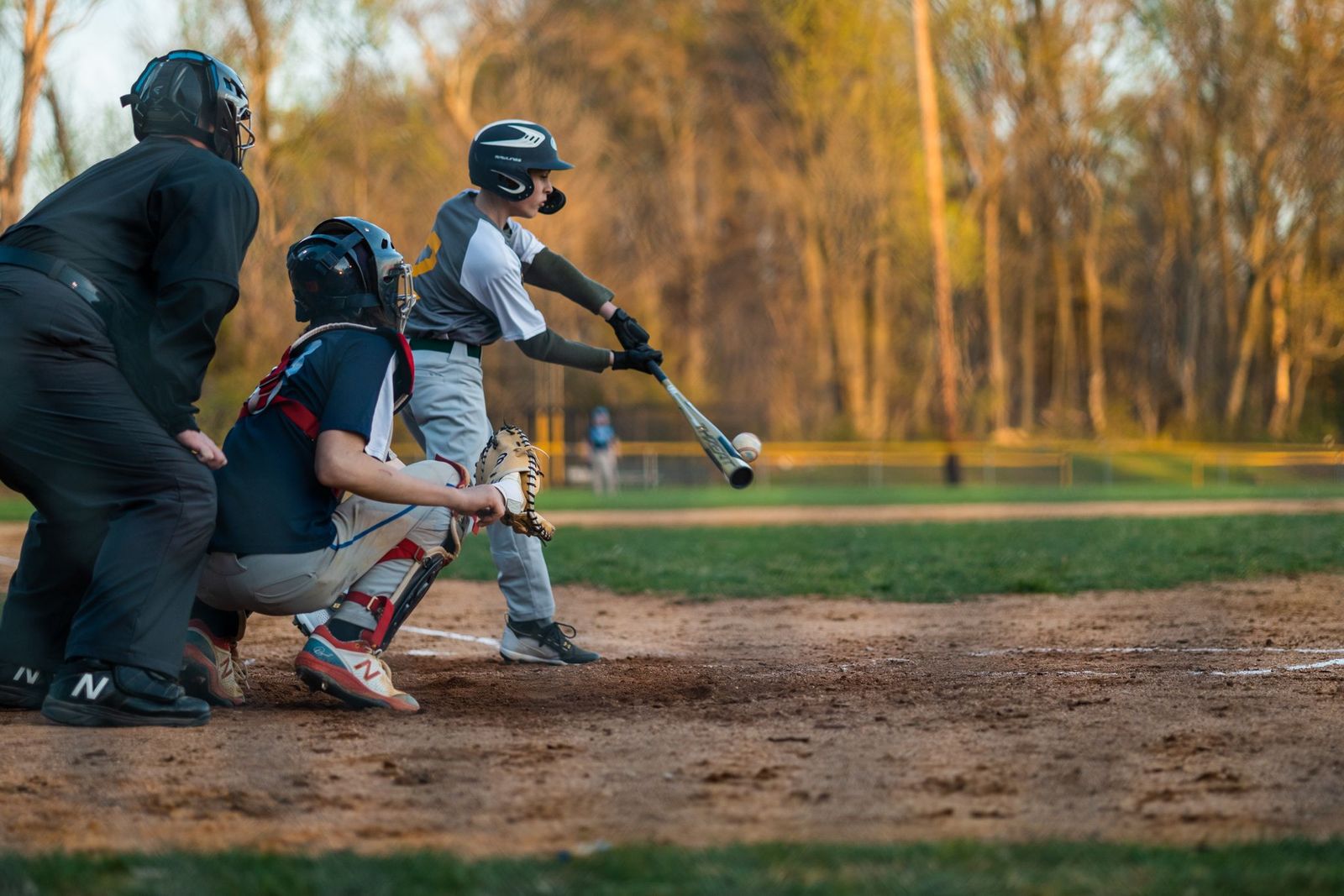
If you're watching the Division Series this week, you'll hear some version of "he's shortening up with two strikes" about once an inning. Your kid has probably heard it too, usually yelled from the dugout with no further explanation. It's good advice. It's also one of the most misunderstood cues in youth baseball, because "shorter" can mean a smarter swing or a scared one. Here's what the best hitters actually change, what's worth copying at 11 versus 16, and how to practice it so it doesn't quietly wreck a perfectly good swing.
Why October makes two strikes harder
Postseason pitching is genuinely nastier, and it's measurable. MLB.com's Travis Sawchik noted last week that since 2001 the league-wide strikeout rate has run about two points higher in the postseason than in the regular season (21.7% versus 19.7%), and that postseason pitchers grade out well above average on Stuff+. The result is a lot of what he calls "helpless swings over the top of sliders and curves."
The interesting part, for a parent, is what doesn't change: command. Walk rates are almost identical in October. The pitches get filthier, but pitchers don't suddenly start painting corners. That's the whole case for a two-strike approach in one sentence: you can't out-slug the nasty stuff, but you can refuse to chase it and put the mistakes in play.
What big-league hitters actually change
The nice thing about 2026 is that we don't have to take hitters' word for it anymore. When Statcast started tracking bat speed, MLB.com's Mike Petriello checked whether hitters really have a two-strike approach. They do: with two strikes, big leaguers swing 1.6 mph slower on average, and their share of 75-mph-plus swings falls from 26% to 17%. Their swing-and-miss rate drops a little, too, from 26% to 24.3%.
How they get there varies. Juan Soto is the most visible example. With two strikes he widens his stance from 40 to 45 inches, puts his front foot flat, and takes a much smaller step. His own description is about as plain as it gets: "choking up, less movement and try to be shorter to the ball." Anthony Rizzo, back in his Cubs days, did something similar with a different look: no high leg kick, choke up, short swing. His hitting coach John Mallee had a phrase for it that I think is the best two-strike cue in baseball: "same pattern, smaller movements."
Two-strike hitting isn't a different swing. It's the same swing with less going on before it starts.
What "shorten up" should mean (and what it usually becomes)
Pull the pro examples and the coaching literature together and you get a short list. Sam Piraro's two-strike checklist in the ABCA's coaching magazine is a good summary: choke up an inch or two, crowd the plate a bit, keep the hands closer to the body, and get the front foot down sooner, which often means a wider stance. Mentally: look fastball and adjust to the off-speed.
Notice what's not on that list: swinging softer. In practice, though, that's what "shorten up" turns into for a lot of kids. They hear "shorter" and decide the job is to poke at the ball. The hands push forward, the hips stop turning, and the result is a weak roller or a lunging foul. Even Petriello flags the tradeoff: shortening up buys contact, but it also makes powerful contact less likely. For a young hitter still building bat speed, I'd rather see a full, on-time turn from a quieter start than a defensive slap.
The other way it goes wrong is the opposite: the kid "protects" by not swinging. Little League's hitting progression, written by Red Sox coordinator Darren Fenster, puts it well: hitting with two strikes "boils down to defending the plate," with far less aggression at 0-2 than at 2-0. Defending means swinging at anything close. A called third strike on the black is not a smart take.
What to copy at 10–12 vs. high school
10–12U: one cue, mostly mental. I wouldn't give a 10-year-old a second stance. Mechanically, the most I'd ask for is "choke up an inch and get your foot down early." The bigger change is the plan: with two strikes, anything close gets a swing, and the goal is a line drive up the middle, not a home run. Soto himself started with the simplest version of this. As a 17-year-old in Rookie ball, his organization's rule was that every hitter needed a two-strike plan, and the baseline was "at least choke up the bat."
13–18: a rehearsed second setup. Older hitters can handle a real secondary approach: a slightly wider base, a smaller stride or a simple toe-tap in place of a leg kick, hands a touch lower and closer, and a zone that expands a few inches off the plate. The key word is rehearsed. Rizzo practiced his in batting practice and in the cage, and Fenster's article makes the same point for youth players: work on it in BP or it won't show up in games. A two-strike setup that only exists in at-bats is a new swing your kid is trying for the first time in the worst count possible.
The two-strike rounds drill
All you need is a bucket of balls, a net, and someone to front-toss from behind a screen.
- Setup: 3 sets of 8 front-toss swings, 24 total. Rest a minute between sets.
- Alternate counts: the tosser calls the count before every pitch, "1-0" or "0-2," switching back and forth. The hitter changes setup only on two-strike pitches.
- Mix the location: on two-strike pitches, toss roughly a third of them just off the plate or slightly out of the zone. The hitter has to decide, not just react.
- Score the right things: one point for hard contact (line drive or firm grounder), one point for a correct take on a pitch well off the plate, zero for a whiff, a lunge, or a weak poke. Don't count "hits."
- Before the drill (13+): 2 sets of 6 tee swings using only the two-strike setup, so the hitter can feel the wider base before timing gets involved.
The comparison you're after: the two-strike score should be close to the normal-count score. If it drops off a cliff, the "short" swing has become a weak swing. And if your hitter can't reliably get the front foot down in time from the two-strike setup, the problem might be the load itself. (If the front foot is sneaking toward the dugout, that's its own fix.)
What a good two-strike rep looks like on video
Feel lies, especially here, because every hitter "feels" shorter with two strikes. Film one round of normal-count swings and one round of two-strike swings from the open side, same spot, same distance (this setup takes five minutes). Then compare the two:
| Check | Normal count | Good two-strike rep | Red flag |
|---|---|---|---|
| Stance and stride | Normal width, full stride or leg kick | A bit wider, smaller step | Stride got longer from tension |
| Front foot timing | Down as the ball arrives | Down clearly earlier | Still in the air at release |
| Head | Some drift is normal | Quieter, stays level | Lunges toward the pitch |
| Hips and turn | Full rotation | Still a full rotation | Hips stop, arms push the bat |
| Contact | Line drives, some lift | Hard, middle or opposite field | Rollovers and soft pop-ups |
The "same pattern" test is simple: pause both clips at the moment the front foot lands and again at contact. The positions should look like the same hitter. If the two-strike clip looks like a different, more frantic person, the approach needs work, not the swing. And if those soft pop-ups keep showing up, here's why they happen.
The honest caveat
A two-strike approach is a tool, not a personality. Some excellent hitters barely change their stance at all. Soto says plenty of good hitters "don't change their stance, but they change their mentality." If your kid's swing is already compact and they rarely chase, the plan might be all they need. And no drill makes 0-2 a good count; even big leaguers are in a bad spot there. The goal is fewer at-bats that end without a fight.
Sources
- Travis Sawchik, MLB.com: Which lineups are built to handle postseason pitching (Oct. 2, 2026): postseason strikeout and Stuff+ data
- Mike Petriello, MLB.com: Do hitters have a 2-strike approach? Data says: Yes! (May 20, 2024): Statcast bat-speed drop with two strikes
- David Adler, MLB.com: Got two strikes on Juan Soto? The battle is just beginning (Apr. 11, 2025)
- Carrie Muskat, MLB.com: Rizzo's two-strike approach among the best: "same pattern, smaller movements"
- Sam Piraro, ABCA Inside Pitch: Effective Methods in Two Strike Hitting (2019)
- Darren Fenster, Little League University: Hitting Drill Progression