Falling back at contact: what it means and how to fix it
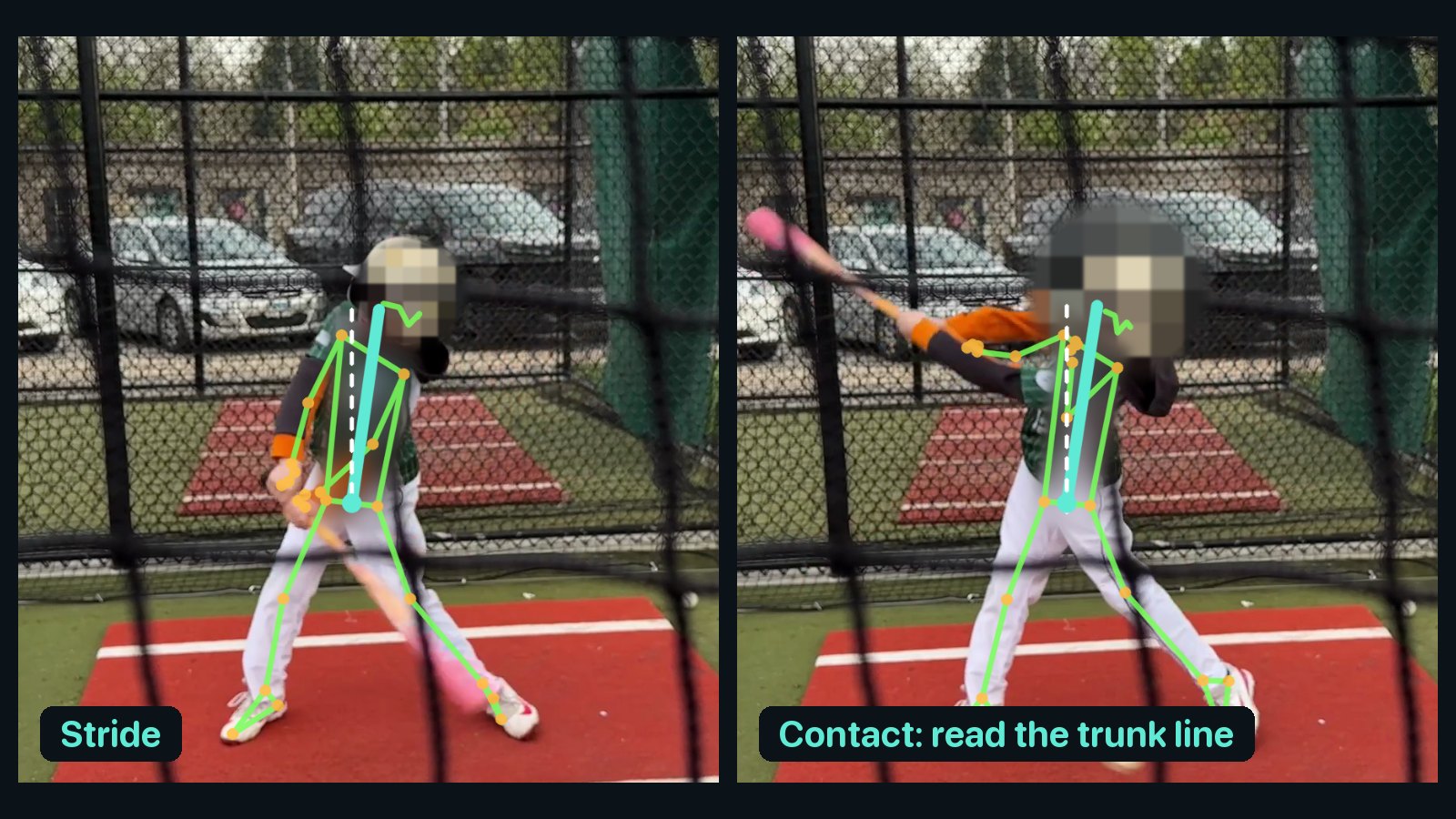
"Falling back at contact" is the label an Angular Baseball report uses when a hitter's upper body is leaning toward the catcher at the moment the bat meets the ball. It's one of the most fixable things in a young swing, and you can check it yourself from a single side-on phone video.
What "falling back at contact" means
Draw a line from the middle of the hips to the middle of the shoulders. At contact, good hitters have that line tipped a little toward the pitcher. The app's benchmark is about +5° to +15° forward. Falling back is the opposite: the line tips toward the catcher, the weight drifts onto the back foot, and the hitter is moving away from the ball they're trying to drive.
You'll often hear it described in other words: "sitting back," "hanging back," "leaning back," or "falling away from the pitch." They all describe the same thing: the body's momentum is going the wrong way when it matters most.
Why it pops balls up
When the upper body leans back, the shoulders tilt with it, and the barrel tends to come up underneath the ball instead of through it. The result is the stuff parents see from the bleachers:
- Pop-ups and lazy fly balls, because the barrel is rising as it meets the ball.
- Weak contact to the pull side, because the hitter is spinning off the back foot instead of driving into the front side.
- Trouble with the outside pitch, because a body moving away from the plate can't reach a ball moving away from it.
If your hitter is popping up a lot, falling back is one of the first things worth checking. (The other usual suspects are in why kids keep popping up.)
How to spot it on video
Film from the side, on the open side of the hitter (first-base side for a right-handed hitter), with the phone upright at chest height and the whole body in frame. Then pause on the frame where the bat meets the ball and look at three things:
- The trunk line. Hips to shoulders: is it tipped toward the pitcher, straight up, or tipped toward the catcher?
- The front foot. Is it planted flat, or is it lifting, rolling or sliding? A front foot that won't stay down is a common partner of falling back.
- The head. Is it over the middle of the body, or has it drifted back over the back foot?
Camera angle matters here more than for most checks. A clip filmed from in front or from behind turns forward-and-back lean into side-to-side lean, so it's hard to judge by eye. A straight side view gives a clean read. Our guide to filming a swing you can actually coach from covers the setup in five minutes.
What causes it
| Cause | What it looks like |
|---|---|
| "Stay back" taken too far | The hitter keeps the weight back through contact instead of only during the load |
| Soft or late front foot | The front foot lands but doesn't plant, so there's nothing to rotate against |
| Trying to lift the ball | The hitter leans back to "get under it" and hit it in the air |
| Late on the pitch | The body bails backward to buy time against a fastball it started on too late |
The first one is worth calling out. "Stay back" is good advice for the load: you want to gather on the back side before the stride. It's the wrong advice for contact. By the time the bat reaches the ball, the weight should have moved forward into a firm front side.
The drill: Front Foot Strike and Plant
This is the drill the app assigns when a report says "Falling back at contact." The steps below are the same ones the app shows.
Front Foot Strike and Plant
Stops the weight from crashing backward at contact · 3 sets of 10
- Put a piece of tape where your front foot lands after your stride.
- Your front foot must strike the tape hard and stay planted through contact.
- If you fall backward, your front foot will lift or roll. That's instant feedback.
- Cue: "Stomp and stay."
- Film from the side. Watch for forward lean at contact, not backward drift.
A second cue that helps a lot of kids: "chest over the front knee." If the hitter finishes with the chest stacked over a firm front leg, they can't be falling back. Start off a tee, then soft toss, then live pitching. Don't go to the next stage until the front foot stays quiet on most swings.
Two coaching videos worth watching
These two coaches explain the problem well and show drills you can do in the backyard. We don't have any relationship with either channel; we picked them because they explain it clearly.
Backside Barrier - Don’t Collapse the backside | Hitting Done Right
A short drill for hitters who fall back as they turn. It uses a barrier to teach turning in a tight space without the chest working away from the ball.
How to Stop Dropping Your Back Shoulder!
A longer breakdown of the back shoulder dropping, which usually happens along with falling back. Good for hitters who lean back to lift the ball.
What a good rep looks like
The hitter gathers on the back side during the load, strides, and the front foot lands and stays planted. As the hips turn, the chest moves toward the pitcher and ends up over a firm front leg. At contact the trunk line tips slightly forward, the head is over the middle of the body, and the finish is balanced. If the hitter can hold the finish for two seconds without stepping, the weight went where it should.
Questions parents ask
What does "falling back at contact" mean?
It means the hitter's upper body is leaning toward the catcher at the moment the bat meets the ball. A line from the middle of the hips to the middle of the shoulders should tip slightly toward the pitcher at contact, about 5 to 15 degrees forward. When it tips back instead, the weight is drifting onto the back foot instead of driving into the pitch.
Why does falling back cause pop-ups?
When the trunk leans back, the shoulders tilt with it and the barrel tends to come up under the ball instead of through it. That produces pop-ups, lazy fly balls and weak pull-side contact, and it makes the outside pitch hard to reach.
Is "staying back" the same as falling back?
No. Staying back is good during the load, when the hitter gathers weight on the back side before striding. By contact the weight should have moved forward into a firm front leg. Falling back is staying back for too long, all the way through contact.
How can I tell if my kid is falling back when hitting?
Film one swing from the side at chest height with the whole body in frame, then pause where the bat meets the ball. If the line from hips to shoulders tips toward the catcher, the front foot is lifting or rolling, or the head has drifted over the back foot, the hitter is falling back.
What drill fixes falling back at contact?
Front Foot Strike and Plant. Put tape where the front foot lands, strike it hard and keep the foot planted through contact, using the cue "stomp and stay." Do 3 sets of 10 and film from the side to check that the trunk tips forward at contact.