Lead shoulder rotation off: how to fix a front shoulder that flies open
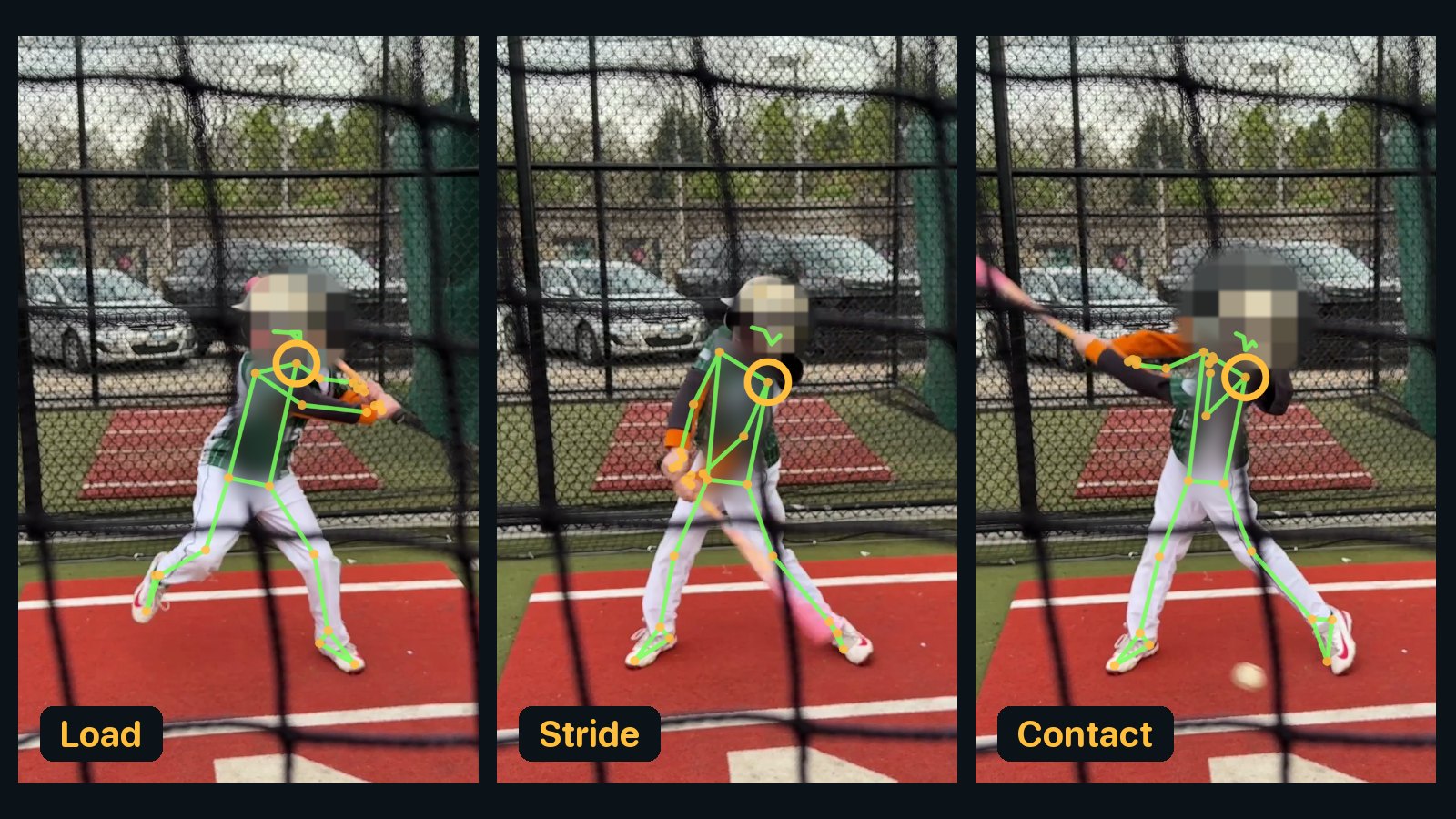
"Lead shoulder rotation off" is the label an Angular Baseball report uses when the front shoulder doesn't turn the right amount between the load and contact. Usually it opens too early, which coaches call "flying open" or "pulling off the ball." Sometimes it keeps spinning too far. Either way, the fix starts with the same idea: keep the front side closed, then turn hard.
What "lead shoulder rotation off" means
The lead shoulder is the one closest to the pitcher: the left shoulder for a right-handed hitter, the right for a lefty. In a good swing it stays closed through the stride, then rotates fully and powerfully into contact. The app measures how far it travels and compares that to a benchmark of about 100° to 145°, the range elite hitters land in.
A swing gets this label when the travel falls outside that range, in one of two ways:
- Too little: the front side pulls off early and flies open before the hands get to the ball, so there's little turn left to deliver at contact.
- Too much: the shoulders keep spinning into a long, loopy swing that's hard to repeat.
Your report shows the measured number next to the benchmark, so you can tell which kind your hitter has.
What flying open costs a hitter
- Rollover ground balls to the pull side, because the barrel comes around the ball instead of through it.
- Swing-and-miss on the outside pitch, because the front side has already pulled the barrel away from the plate.
- Less power, because the turn happens before contact instead of at contact.
Flying open often travels with stepping in the bucket: when the front foot steps away from the plate, the front shoulder usually goes with it.
How to spot it on video
Film from the side (first-base side for a right-handed hitter), phone upright at chest height, whole body in frame. Then step through the swing frame by frame:
- At foot plant: is the front shoulder still pointed at the pitcher, or has it already started turning toward the dugout?
- Between foot plant and contact: does the shoulder turn hard and late, or did most of the turn happen before the hands moved?
- At contact: is the head still on the ball, or has it pulled off with the shoulder?
If the chest is showing to the pitcher at foot plant, the front side opened early. The filming guide covers the camera setup.
What causes it
| Cause | What it looks like |
|---|---|
| Shoulders and hips turning together | No separation; the upper body opens as soon as the hips do |
| Trying to pull everything | The hitter turns early to hook the ball to the pull side |
| Front foot stepping away | Stride lands open and the front shoulder follows it |
| Eyes leaving the ball | The head pulls off to watch where the ball went, and the shoulder follows the head |
The drill: Fence Drill
This is the drill the app assigns when a report says "Lead shoulder rotation off." The steps below are the same ones the app shows.
Fence Drill
Keeps the front shoulder from flying open too early · 3 sets of 10
- Stand facing a fence or wall, toes 6 to 8 inches away.
- Take your normal stride and swing.
- If your front shoulder opens early, the bat will clip the fence.
- Focus on keeping the front shoulder in and driving through the ball.
- The fence gives instant physical feedback.
Start with slow, half-speed swings until the bat stops clipping, then build to full speed. Two cues that pair well with it: "front shoulder points at the pitcher" through the stride, and "keep your chin on your front shoulder" until contact. Then move to a tee on the outside corner, where an early front shoulder shows up right away as a rollover.
Two coaching videos worth watching
These two coaches explain the problem well and show drills you can run at home or at practice. We don't have any relationship with either channel; we picked them because they explain it clearly.
How to keep a hitter's front side from flying open
A clear four-minute explanation of why the front side opens early and what to do about it. A good place to start.
7 Baseball Hitting Drills To Stop Pulling Off The Baseball (...and Keep Your Front Shoulder Closed)
A former big-leaguer runs through seven drills, most of which need nothing more than a tee and a net. Good for building a week of practice.
What a good rep looks like
Through the load and stride, the front shoulder stays pointed at the pitcher. The front foot lands closed. Then the hips start the turn, the shoulders follow a beat later, and the front shoulder rotates fully and fast. It finishes the turn at contact, not before. The head stays on the ball, and the ball goes where it's pitched: the outside pitch goes the other way instead of rolling over to the pull side.
Questions parents ask
What does "lead shoulder rotation off" mean?
It means the front shoulder didn't turn the right amount between the load and contact. Elite hitters turn the lead shoulder about 100 to 145 degrees. Less than that usually means the front side pulled off and flew open early; more than that means the shoulders over-rotated into a long, loopy swing.
What is a front shoulder flying open?
It's when the front shoulder starts turning toward the dugout before the hands get to the ball. The hitter spends the turn too early, so the barrel comes around the ball instead of through it. That leads to rollover ground balls and misses on the outside pitch.
How far should the front shoulder rotate in a swing?
Fully, but in the right order. The front shoulder should stay closed through the stride, then rotate hard into contact. Angular Baseball's benchmark is about 100 to 145 degrees of lead-shoulder travel, the range elite hitters land in.
What drill keeps the front shoulder closed?
The Fence Drill. Stand facing a fence or wall with your toes 6 to 8 inches away, take your normal stride and swing. If the front shoulder opens early, the bat clips the fence. Do 3 sets of 10, starting at half speed.
Can a hitter over-rotate the front shoulder?
Yes. A shoulder that keeps spinning past the ball makes the swing long and loopy and hard to repeat. The fix is the same order as for flying open: stay closed through the stride, then turn hard and finish the turn at contact.