Is Your Softball Hitter's Swing "Wrong" — or Built for a Different Pitch?
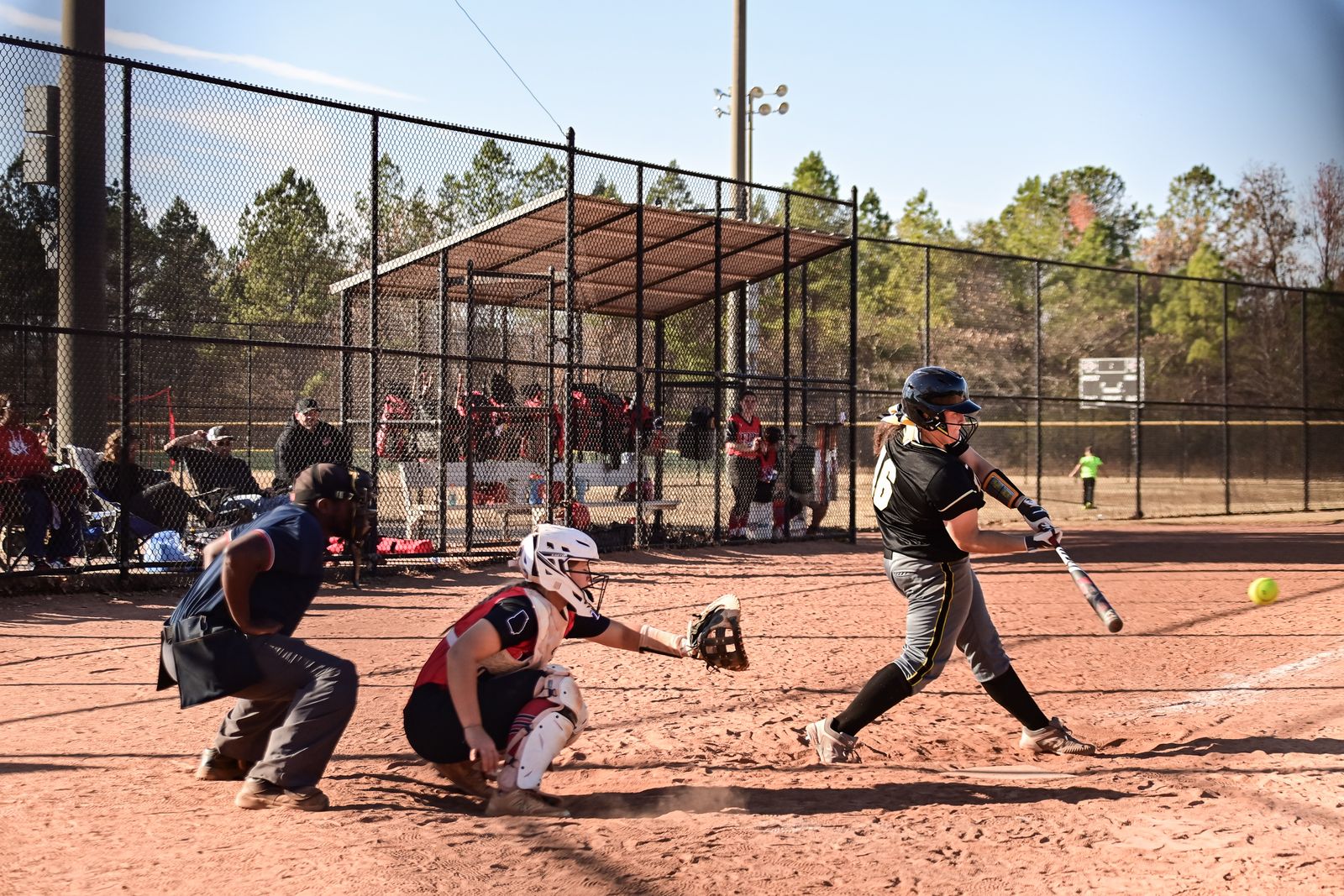
If you're a fastpitch parent, here's your problem in one sentence: nearly all of the swing advice on the internet is baseball advice. Most of it translates fine. But a specific slice of it — the part about swing plane — can quietly make a softball hitter worse, and it happens to be the part youth baseball talks about most. Let's sort out what actually differs, what's identical, and which borrowed cues to leave on the shelf.
First, the honest headline: the swings are mostly the same
There's a persistent myth that softball hitters need a fundamentally different swing — flatter, choppier, "short to it" in a way baseball hitters aren't. The research doesn't support it. Biomechanics work on college fastpitch hitters describes the same highly coordinated, ground-up rotational movement you see in baseball — in fact, for years researchers mostly projected baseball findings straight onto softball because the underlying motion is that similar. And comparative breakdowns of elite hitters in both sports keep landing in the same place: far more similarities than differences.
Everything that makes a baseball swing good makes a fastpitch swing good:
- A stable, athletic base and a controlled stride.
- A real load — hands and weight gathered back before the front foot lands.
- Hips first — the lower half starts the swing and the hands stay connected, riding the rotation instead of leading it.
- A short path to the ball with the barrel accelerating through contact, not before it.
If your hitter has those four things, the swing is not "wrong." Full stop. What's left is one genuine difference — and it's not in the hitter. It's in the pitch.
The one real difference: where the pitch comes from
A baseball arrives on a downhill plane: an overhand release from an elevated mound, coming down through the zone. A fastpitch softball arrives on a flat-to-rising plane: a windmill delivery released down at the hip, from flat ground, 43 feet away at the high school and college level. A well-thrown rise ball is climbing relative to the hitter's sightline as it crosses the plate — a pitch shape that simply does not exist in baseball.
And before anyone assumes softball hitters have it easier because the pitch is slower: they don't. A 66 mph fastpitch from 43 feet reaches the plate in roughly the same 0.40 seconds a 95 mph fastball takes from 60 feet 6 inches. The decision window is major-league tight in both sports; the ball is just approaching on a different line.
What the pitch plane changes in the swing
The bat's job is the same in both sports: get the barrel into the plane of the pitch as early as possible and keep it there as long as possible. Since the planes differ, the ideal bat path differs — by degrees, not by design:
- Baseball: the pitch is traveling downhill, so an efficient swing works slightly uphill to meet it — the modest upward attack angle you hear about constantly in launch-angle conversations.
- Softball: the pitch is flat or climbing, so the efficient path is flatter and longer through the zone — more level runway, less uppercut.
Notice what's not in that list: the load, the stride, the hip fire, the sequencing. Everything from the ground up through the torso is shared. The adjustment lives out at the end of the chain, in the angle the barrel takes through the hitting zone.
The borrowed cue that backfires
Here's where softball hitters actually get hurt by baseball content. A parent watches launch-angle highlights, tells their fastpitch hitter to "get it in the air" or "swing up through it," and the hitter obliges — with a bat path angled up through a zone the pitch is entering flat or rising. The barrel crosses the pitch plane instead of riding it. The contact window shrinks to a point. The results are the ones you've probably seen: pop-ups, foul balls straight back, and ugly swings under rise balls that were very hittable.
(For balance: the opposite grandpa-cue — "swing down on it," in either sport — is just as wrong. Chopping down produces weak ground balls in baseball and softball. The goal is never up or down for its own sake; it's matching the plane of the pitch.)
The younger the hitter, the gentler this all is — 10U pitching doesn't rise, and most of what a 10-year-old needs is the shared foundation, not plane fine-tuning. But by the time your hitter faces real windmill velocity in the 12U–14U range, the plane difference is real, and baseball-specific swing cues start carrying an actual cost.
How to check your hitter's path on video
You don't have to guess. Film one swing from the open side — the side her chest faces, phone at chest height, slow motion on (we published a complete guide to filming a swing this week — every word of it applies to fastpitch). Then scrub to contact and look at two things:
- The barrel's runway. In the frames before and after contact, the barrel should be moving roughly level with the incoming pitch — a long, flat window where contact could have happened. If the barrel is slicing steeply upward through a single possible contact point, that's the baseball uppercut talking.
- Everything behind the barrel. Front foot down before the hands go, hips opening first, hands staying connected to the turn. This part should look exactly like a good baseball swing — because it is one.
Three drills for a fastpitch-shaped path
1. High-tee drill (kill the uppercut)
Set the tee at the top of the strike zone — chest height. A level path produces hard line drives; an uppercut produces pop-ups or clean misses, instantly and obviously. This is the single best self-correcting drill for a hitter who's been marinating in baseball content. 3 sets of 8.
2. Low-release front toss (see the real plane)
Have your tosser deliver firm front toss from a low, underhand release — kneeling or seated, hand at hip height, from behind a screen — so the ball arrives flat instead of dropping in on an arc. It's the closest a backyard gets to a windmill plane, and hitters feel the difference in one round. 3 rounds of 8.
3. Hip-first walk-throughs (the shared foundation)
Identical in both sports: start the swing from the back hip with the hands consciously held back a beat, exaggerating the separation between lower and upper half. If the hands are leading, no amount of plane-matching will save the swing — this is the same fix we prescribe for casting in baseball. 10 slow reps, quality over volume.
The cheat sheet
| Baseball | Fastpitch softball | |
|---|---|---|
| Delivery | Overhand, from a raised mound | Windmill, released at the hip, flat ground |
| Pitch plane | Downhill through the zone | Flat to rising |
| Reaction window | ~0.40s (95 mph at 60'6") | ~0.40s (66 mph at 43 ft) |
| Ideal bat path | Slightly uphill to match the pitch | Flatter, longer through the zone |
| Load, stride, hip-first sequence | Identical — this is the swing's foundation in both sports | |
Sources
- A Three-Dimensional Kinematic and Kinetic Study of the College-Level Female Softball Swing — Journal of Sports Science & Medicine
- Bruce Bolt: Softball Swing vs Baseball Swing — Key Differences Explained
- Biomechanics of Fastpitch Softball Pitching: A Practitioner's Guide — the windmill delivery and release