Barry Bonds' Swing: The Shortest Path to the Ball
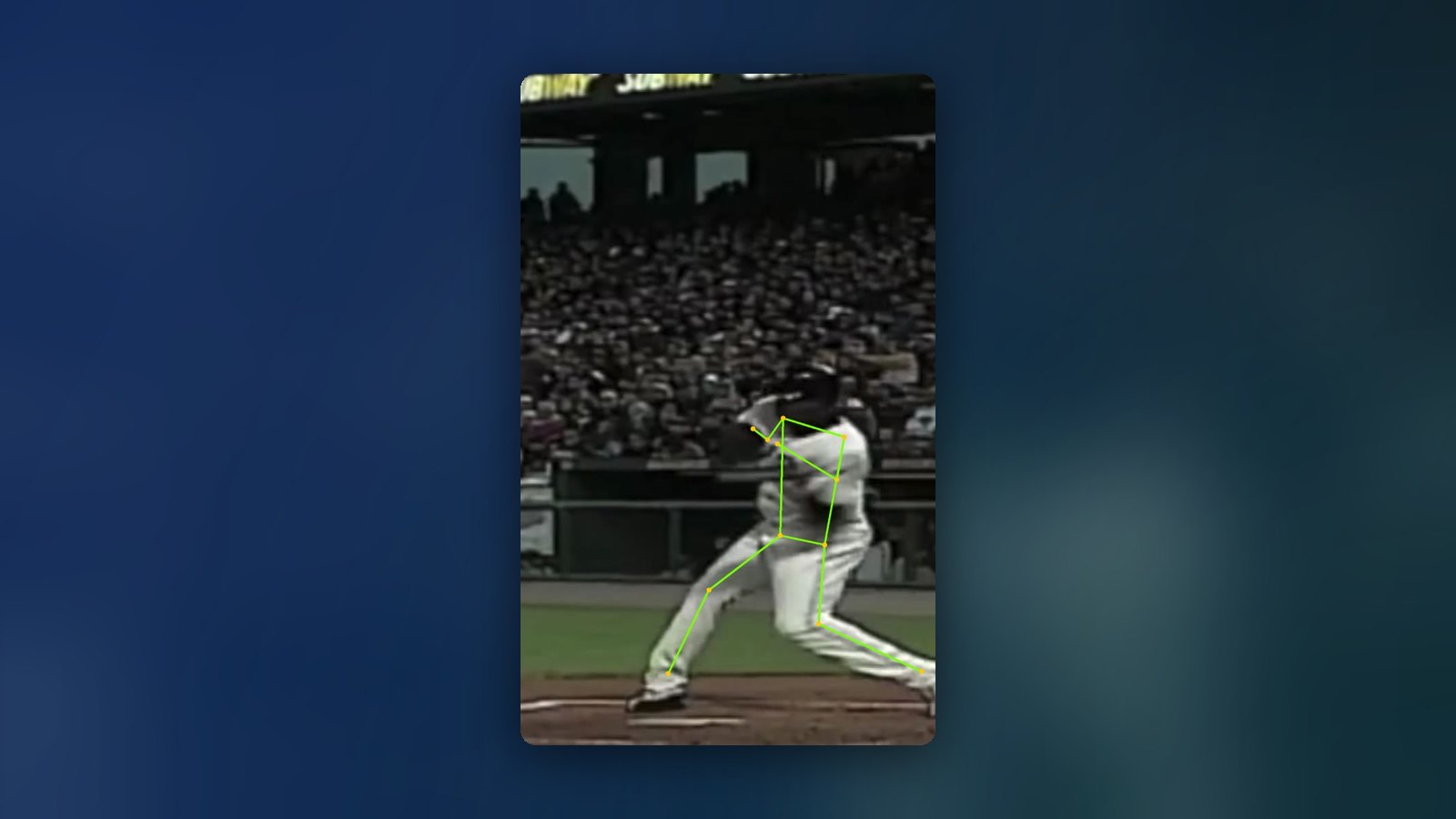
Set aside every argument that comes with the name and just watch the swing. What you see is the most efficient motion anyone has filmed at the plate — a hitter who almost never got beat, because there was nothing in the swing to break down. Bonds is our reference for one idea: connection. Getting everything to the ball with nothing wasted.
What he's known for
A swing with no wasted motion. His head stayed dead still, his hands stayed tight to his body, and the barrel took the shortest available route to the ball. Everything that wasn't helping had already been removed years earlier.
That's the underrated part. A short swing isn't just a power swing — it's a repeatable one. Fewer moving parts means fewer things that can be a half-beat off on any given pitch. He could wait longer, decide later, and still get the barrel there, which is the real reason pitchers stopped throwing him strikes.
The mechanic: what "connected" actually means
Connected means the arms and the torso move as one unit until the last possible moment. The back elbow stays in against the ribcage while the body rotates, so the hands are pulled through by the torso instead of being pushed by the arms. The barrel gets released late, into the ball, rather than early, out away from it.
The opposite is casting — the hands drifting away from the body on the way down. It is the single most common power leak we see in youth swings, and it's a nasty one because it feels strong. Throwing the hands at the ball feels like effort. It just happens to be effort spent lengthening the path.
Three things go wrong at once when a hitter casts:
- The path gets longer, so the barrel arrives late and the hitter can't catch up to real velocity.
- Inside pitches become unhittable, because there's no room left between the hands and the body to turn on anything in.
- The torso stops contributing, because once the arms are extended, the rotation behind them has nothing left to pull on.
What Angular measures
We grade connection with the back elbow angle at contact. The target band is 90–120°. Inside that range, the back arm is still folded and the barrel is being pulled through on a direct line. Push past about 135° and the arm is functionally straight at contact — the barrel has already been released and the swing is long.
| Back elbow at contact | Reading |
|---|---|
| Target band for a scored swing | 90–120° |
| Youth-session swings in our benchmark set (median) | 109° |
| Adult amateur swings in our benchmark set (median) | 162° |
That gap is worth sitting with, because it upends the assumption most parents start from. The kids in our benchmark set were, on the whole, more connected than the adults. Casting isn't a childhood phase that gets outgrown — it's a habit that gets rehearsed, and an adult swinging at a tee in the backyard with a straight arm at contact has been rehearsing it for twenty years. If you're the one demonstrating for your kid, film yourself too.
How to spot casting on your kid's video
Film one swing from the side, belt height, whole body in frame. Then find the frame where the bat meets the ball and stop there.
- Look at the back arm. At contact it should still be bent — think of an "L" that hasn't quite opened up. If it's a straight line from shoulder to knuckles, that's casting.
- Now scrub backwards a few frames. Watch the gap between the back elbow and the ribs. In a connected swing that gap stays small until the hands are past the front hip. In a cast, it opens up the instant the swing starts.
- Check where the hard contact goes. Casters live on the outer half. They can serve an outside pitch fine and get jammed by everything in, because they've spent their room.
The fix: Inside Tee + Towel
This is the drill our app assigns when the back elbow reads long. It gives instant physical feedback, which is why it beats being told "stay inside the ball" a hundred more times.
Inside Tee + Towel Drill
- Place a tee on the inside corner, at about mid-thigh height.
- Tuck a small towel under the back armpit — held lightly, not clamped.
- Take a normal stance with a slight knee bend.
- Start the swing with the back elbow pinned to your side.
- The towel must stay tucked until the hands pass the front hip.
- Only then extend and drive through the ball.
- The ball should go hard to the pull-side gap — not popped foul.
What a good rep looks like: the towel drops after contact, and the ball comes off hard toward the pull-side gap on a line. A towel that hits the ground during the load means the elbow left early. A ball that squirts foul down the line means the hands got out ahead of the turn — slow the rep down rather than swinging harder.
Age note. For 10–12s, run this at about 70% effort. Casting at that age is usually a strength problem dressed up as a mechanics problem — a bat that's too heavy will drag the hands away from the body no matter what the kid intends. Check the bat before you rebuild the swing.
Not sure whether your hitter is casting? Film one swing from the side and run it through Angular Baseball — you'll get the back-elbow angle measured against the same band, marked on the frame where it happens. First analysis is free.