Bo Bichette's Swing: Where Bat Speed Actually Comes From
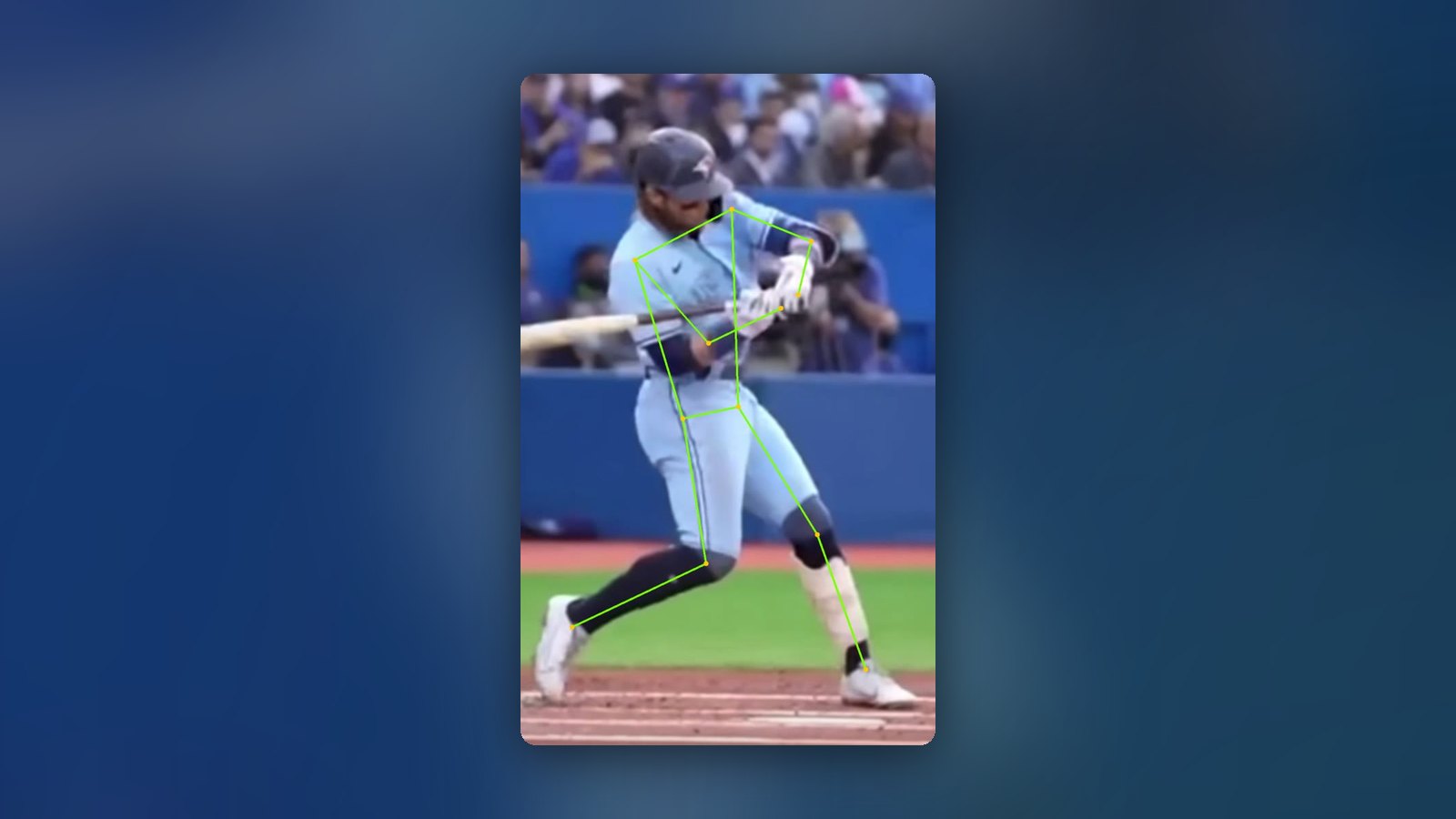
Pure, aggressive bat speed in a hit-first package. Bichette is our reference for the part of the swing every young hitter wants more of — fast hands — and for the most misunderstood question in youth hitting: where does bat speed actually come from?
What he's known for
A big leg kick, a free-swinging mentality, and hands that flat-out fly. Bichette loads with a pronounced stride to gather rhythm and timing, then unloads — the barrel accelerates late and hard, which is how a contact-first hitter still drives the ball gap to gap. It's aggression with a plan: get the bat to the ball fast, and trust it.
He signed a three-year deal with the Mets in January 2026 and slid over to third base, with Lindor at short — worth mentioning because the swing came with him unchanged. That's the point of a repeatable move. It travels.
The mechanic: bat speed is a sequencing outcome, not an arm trait
Here's the thing almost everyone gets backwards. Bat speed is not produced by the hands. The hands are the last link in the chain, and the last link only goes as fast as everything behind it whipped it.
Ground → legs → hips → torso → shoulders → arms → bat. Each segment accelerates and then decelerates, and that deceleration is what transfers speed forward to the next segment. A hitter who tries to generate speed at the hands short-circuits the whole thing: the arms fire first, the torso has nothing to pull on, and the swing is both slower and longer than it looked from the on-deck circle.
Which is why a 5'4" thirteen-year-old with clean sequencing routinely out-hits a bigger kid who is swinging harder. Bat speed is available before strength is.
For context on the ceiling: MLB now tracks bat speed directly with Statcast bat tracking. The league average swing sits around 71–72 mph, a "fast swing" is defined at 75+ mph, and only about a fifth of all big-league swings clear that bar. Even at the top of the sport, the spread is narrower than the highlight reels suggest — the difference-maker is how consistently a hitter gets near their own ceiling.
What Angular measures — and what it deliberately doesn't
We don't claim to measure bat speed in miles per hour from a phone video. Nobody can, honestly, without tracking the barrel with hardware or a calibrated multi-camera rig. What we measure is hand speed: how fast the grip travels through the zone, expressed in body-lengths per second.
That unit choice is the whole trick. Measure in pixels and a kid filmed from ten feet away scores double the same kid filmed from twenty. Normalize by the hitter's own body height in the frame and camera distance cancels out — a 5'2" twelve-year-old and a 6'2" senior can be compared honestly, and a hitter can be compared to themselves across a whole season of different fields and different parents holding the phone.
| Hand speed through the zone | Reading |
|---|---|
| Target band for a scored swing | 5.0+ BL/s |
| Youth swings in our benchmark set (median) | 4.7 BL/s |
| Youth swings in our benchmark set (range) | 3.4–7.6 BL/s |
How to spot slow hands on your kid's video
Film one swing from the side, belt height, whole body in frame — then watch it at quarter speed twice.
- Watch where the barrel is quickest. In a good swing, the fastest stretch is right at and just after the ball. In a slow-hand swing, the peak comes early and the barrel is already coasting by the time it reaches contact.
- Watch the finish. A swing with real speed behind it has to be decelerated — the body keeps rotating after contact and the bat wraps. A swing that stops neatly at contact never had much to slow down.
- Watch the front hip. If the hands start before the hips clear, the arms are doing the work. That's a sequencing problem wearing a bat-speed costume.
The fix: build speed from the ground, then add intent
When hand speed comes back low on a report, the drill our app assigns is the same one it assigns for separation — because that's where the speed comes from.
Hip Fire Drill
- Anchor a light resistance band at hip height behind home plate.
- Hold the ends at your waist in your normal stance.
- Begin the swing by rotating only the hips toward the pitcher.
- Keep the front shoulder closed as long as possible.
- When the hips are nearly facing the pitcher, then fire the shoulders.
- Five slow-motion reps to feel the order, then five at full speed.
Then: swing with intent, on purpose
The second half is simpler and gets skipped constantly. A lot of young hitters have never actually tried to swing fast — they've spent years being told to be short, be quiet, don't overswing, make contact. They've been trained into a guided swing.
Fix that with an intent ladder off the tee: 5 swings at 70%, 5 at 85%, 5 at 100%, twice through. The 100% reps are allowed to be ugly. The goal is to let the nervous system find out what full speed feels like, then keep the shape as you dial back. Do it at the start of a session, not the end — speed work on a tired kid trains slow.
Curious where your hitter actually sits? Film one swing from the side and run it through Angular Baseball — hand speed comes back on the same scale every time, so you can watch the number climb across a season. First analysis is free.